



How to Choose the Right PPF Roll Width for Your Shop?
When purchasing paint protection film, shop owners usually compare brands, thickness, surface finish, and price. Roll width, however, is just as important.
Buying a wider roll may seem like a convenient way to handle more vehicles, but it does not necessarily mean better material efficiency.
The right PPF roll width depends on the vehicles you work on, the services you offer, and how you prepare your cutting patterns.
1. Does PPF Roll Width Really Matter?
Imagine a shop that mainly installs door edge protection, mirror protection, and small partial PPF packages.
If every job starts with a wide roll, a considerable amount of film may be left unused along the sides.
Another shop specializing in large SUVs and full-body installations may face the opposite problem. Narrow film can limit coverage and make certain panels more difficult to complete without seams.
Roll width directly influences material consumption, installation flexibility, and inventory management.
Understanding your actual installation requirements is the first step toward making better purchasing decisions.
2. Common PPF Roll Widths
PPF is available in different widths, depending on the manufacturer, product series, and local distribution.
Examples include 24, 36, 48, 60, and 72 inches. Manufacturer product literature confirms that available widths vary between film series.
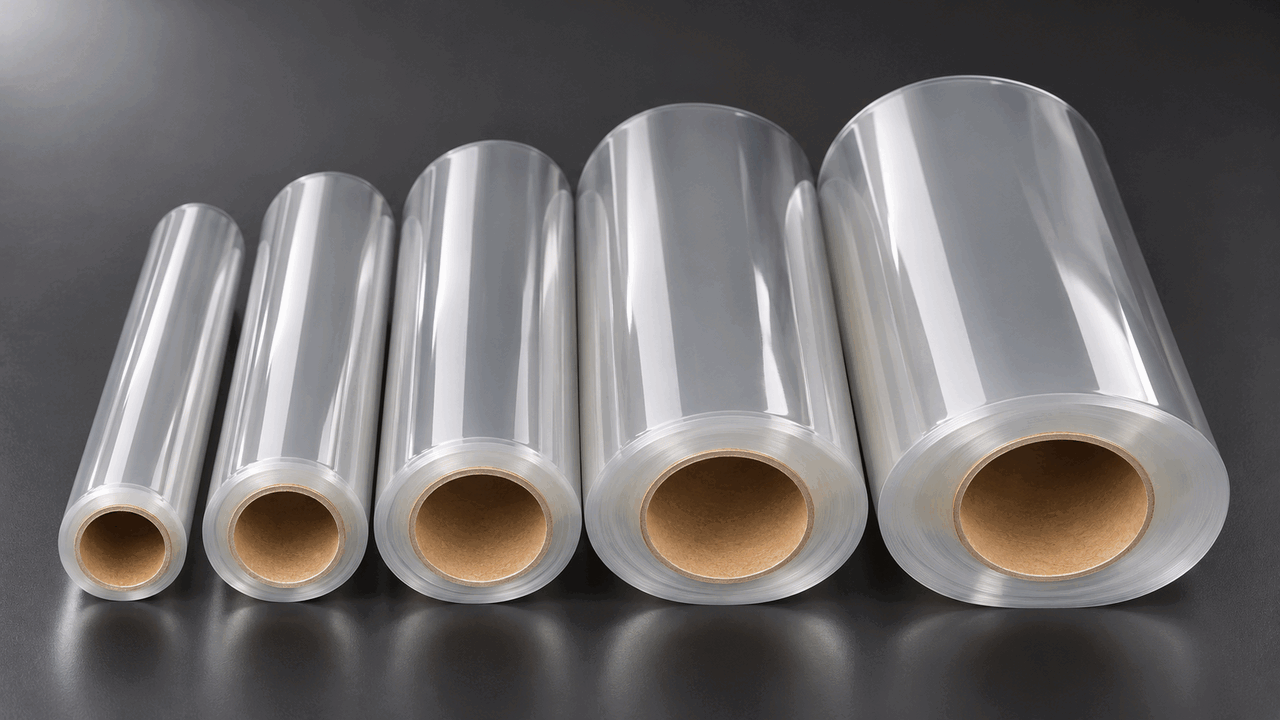
| Roll width | Approximate width | Typical applications |
|---|---|---|
| 24 inches | 610 mm | Small panels and partial protection |
| 36 inches | 914 mm | Smaller panels and selected fenders |
| 48 inches | 1,219 mm | Medium-sized body panels |
| 60 inches | 1,524 mm | Full-front and full-body installations |
| 72 inches | 1,829 mm | Selected oversized panels and large vehicles |
These applications are general references rather than fixed installation rules.
A particular panel may require a different width depending on its shape, curvature, pattern orientation, and wrapping allowance.
For many general-purpose PPF shops, a 60-inch roll is a practical starting point because it can accommodate a broad range of automotive panels.
3. Match Film Width to Your Installation Jobs
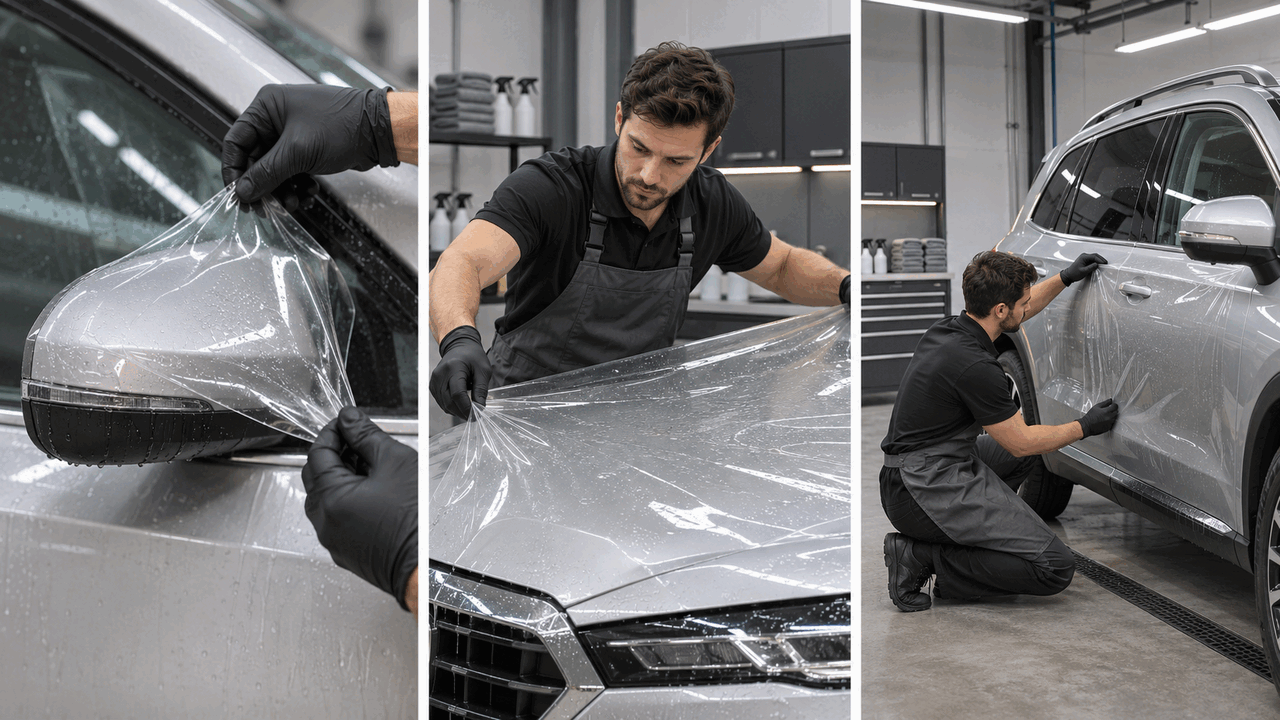
Partial PPF installations
Partial protection packages often include:
- Door edges
- Door handle cups
- Side mirrors
- Headlights
- Rocker panels
- Luggage loading areas
These jobs do not necessarily require full-width film.
Narrow rolls or suitable leftover material may be more economical, especially when similar jobs are performed regularly.
Full-front PPF installations
Full-front packages generally include the hood, front bumper, fenders, and side mirrors.
A 60-inch roll can be suitable for many vehicles, but the largest pattern should always be checked before cutting.
Instead of preparing each component separately, shops can arrange several patterns together to make better use of the available film.
Full-body PPF installations
Full-body projects involve a wider variety of panel sizes.
Doors, hoods, bumpers, roofs, and rear quarter panels may require different pattern orientations and material lengths.
Check the largest individual pattern before deciding which film width to use.
A vehicle being classified as an SUV does not automatically mean it requires an extra-wide roll.
Large SUVs and pickup trucks
Large vehicles may have wider hoods, larger doors, or more complex body panels.
In some cases, additional film width can help installers complete oversized areas with fewer seams.
However, purchasing extra-wide rolls only makes sense if your equipment supports them and your shop receives enough suitable jobs.
4. Wider PPF Rolls Are Not Always More Economical
A wider roll provides more space for placing patterns side by side. It can also make certain large-panel installations easier to plan.
But there are disadvantages.
- Higher material cost per linear meter when the price per square meter is similar.
- More unused side material when patterns are poorly arranged.
- Additional storage and handling requirements.
- Potential incompatibility with existing cutting equipment.
Consider an illustrative example:
A shop uses two meters of film for a small group of patterns.
| Film width | Film area consumed |
|---|---|
| 1.22 m | 2.44 m² |
| 1.52 m | 3.04 m² |
| 1.83 m | 3.66 m² |
If the same patterns fit comfortably within the narrower film, using the widest roll may consume more material.
However, if the wider roll allows patterns to be arranged more efficiently and reduces the required cutting length, it could become the better option.
Compare the total film area consumed, not just the length cut from the roll.
5. Consider Your PPF Cutting Plotter
Before purchasing a new film width, check whether your cutting plotter can handle it.
Two machine specifications are particularly important:
- Maximum media width: the widest film that the machine can load.
- Maximum cutting width: the usable width within which the blade can cut.
These specifications are not necessarily identical.
For example, the SlaByte S-Cut V70 supports a maximum media width of 1,650 mm and a maximum cutting width of 1,550 mm, according to its published specifications.
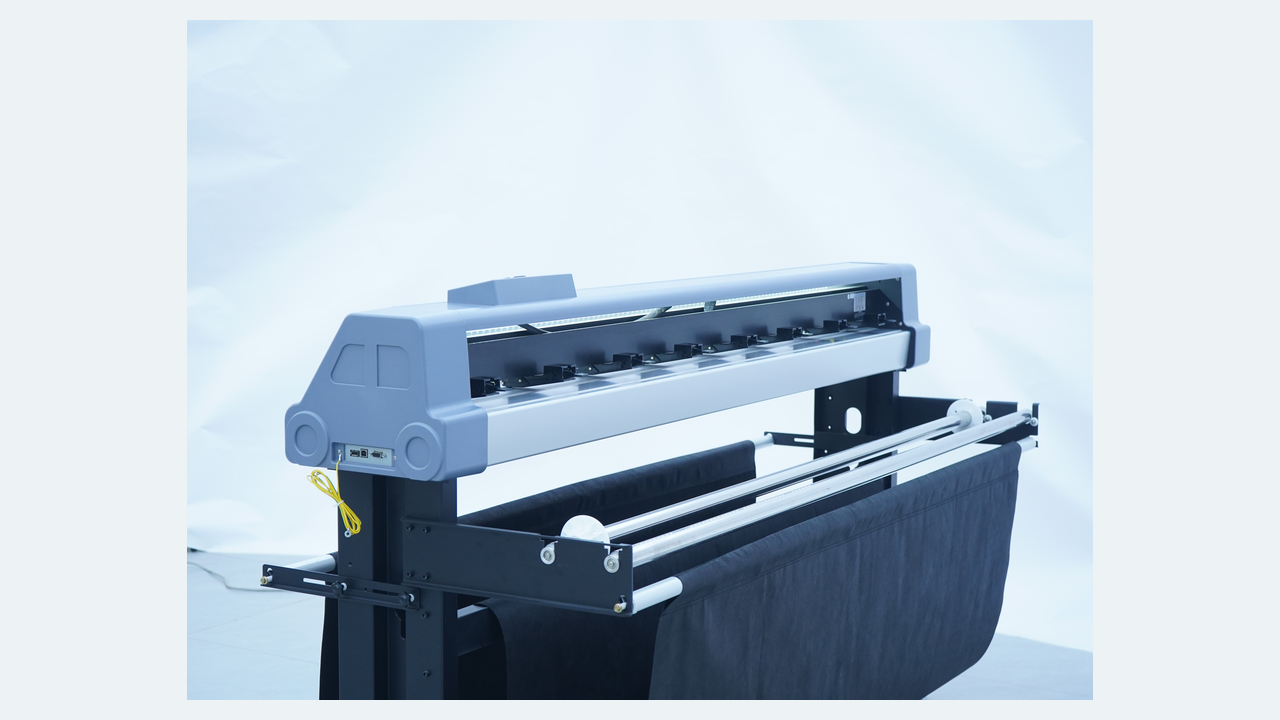
This distinction matters when preparing patterns close to the maximum available width.
Before ordering film, confirm:
- ✓ The roll fits the machine's material feeding system.
- ✓ The pattern fits within the usable cutting area.
- ✓ Sufficient film remains for stable feeding and positioning.
- ✓ The layout dimensions match the actual material width.
For more information, see our guide on choosing the right cutting plotter size for your shop.
6. How Pattern Layout Affects Film Usage
Two shops can use the same width of PPF for the same vehicle and still consume different amounts of material.
One of the reasons is pattern layout.
When large patterns are placed without considering smaller components, they can leave irregular empty areas across the film.
Mirrors, door handle cups, and other small patterns may fit into some of these spaces.
A better layout considers the complete group of patterns before cutting begins.
Digital PPF cutting software allows installers to review pattern placement and arrange components according to the available film width.
With SlaByte cutting software, shops can prepare and adjust patterns before sending them to the cutting equipment.
However, material efficiency should never come at the expense of correct pattern dimensions or installation allowances.
The goal is to use the available film intelligently while maintaining the coverage required for a quality installation.
You can explore more practical material management methods in our PPF material efficiency guide.
7. Should Your Shop Stock Multiple Roll Widths?
Keeping every available PPF width in stock is rarely necessary.
A practical approach is to review your recent installation jobs and identify the types of panels your shop handles most frequently.
| Shop type | Suggested inventory approach |
|---|---|
| General PPF shop | One versatile main width |
| Partial protection specialist | Main roll plus narrower alternatives |
| Full-body PPF specialist | Main roll with wider options when required |
| Mixed automotive film shop | Stock widths according to actual demand |
Avoid purchasing film simply because it might be useful someday.
Different film widths, finishes, and product series can quickly increase inventory complexity.
A better approach is to maintain a core selection that covers regular jobs and purchase less frequently used widths when suitable projects are confirmed.
This helps reduce unnecessary inventory while maintaining installation flexibility.
8. Final Thoughts
The most suitable PPF roll width is not necessarily the widest one available.
It is the width that fits your regular jobs, cutting equipment, and material management strategy.
Before making your next film purchase, consider:
- ✓ What vehicles do you work on most often?
- ✓ What is the largest pattern you regularly cut?
- ✓ Can your cutting equipment handle the selected film width?
- ✓ Can smaller patterns be arranged within unused areas?
- ✓ Will the additional material width actually improve efficiency?
By combining accurate vehicle patterns, suitable cutting equipment, and thoughtful material planning, PPF shops can make better use of every roll.
At SlaByte, we believe smarter film cutting starts with better preparation.
If you are looking for a cutting solution that fits your shop's installation needs, feel free to contact our team.
Frequently Asked Questions
1. What is the most common PPF roll width?
A 60-inch (approximately 1,524 mm) roll is a widely used option for general automotive PPF applications.
However, the most suitable width depends on your installation requirements.
2. Is a wider PPF roll always better for full-car installations?
No. Wider film can accommodate certain large panels, but it may increase unused material if the extra space is not used efficiently.
3. Can narrow PPF rolls reduce material waste?
Yes, particularly for shops that regularly handle smaller panels and partial protection jobs.
The savings depend on pattern layout, film pricing, and actual material consumption.
4. Can I use different PPF roll widths on the same cutting plotter?
Generally, yes, provided that the material fits the machine's feeding system and the cutting patterns remain within its supported working area.