



Flatbed vs Roll-Fed PPF Plotters: Which Fits Your Shop?
Choosing a PPF cutting plotter can get confusing once you start looking beyond the price tag.
Some machines use a large, flat cutting platform. Others feed film back and forth through rollers. Both can be used in professional film shops, but the way they handle material is quite different.
For a busy PPF business, that difference matters. It affects how you load film, manage large patterns, organize your workspace, and prepare material for installation.
So, which type should you buy? The answer depends less on which machine looks more advanced and more on how your shop actually works.
1. What Is the Difference Between Flatbed and Roll-Fed Plotters?
The main difference is simple: how the film and cutting blade move during the job. Both systems follow cutting paths supplied by software. What changes is how the material is supported and positioned while those paths are being cut.
How Flatbed Cutting Works
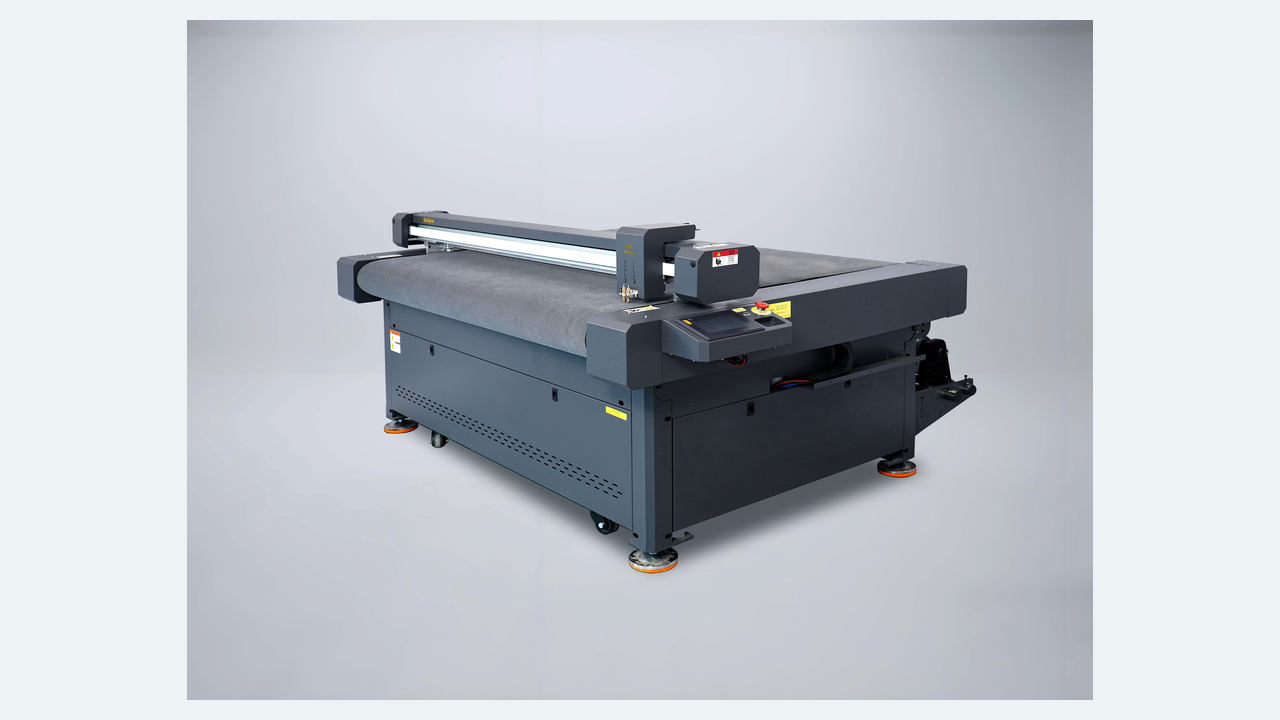
A flatbed cutter uses a cutting platform to support the material. In a typical cutting operation, the film remains positioned on the platform while the cutting head moves across the working area.
This reduces the need to move the film back and forth during an individual cutting section. For materials that are difficult to feed consistently, having a supported cutting surface can be useful.
However, flatbed machines are not all built the same way. Some have fixed working areas, while others include automatic feeding or sectional cutting to handle longer jobs. A buyer should always check the actual material-handling system rather than assuming every flatbed machine has the same limitations.
How Roll-Fed Cutting Works
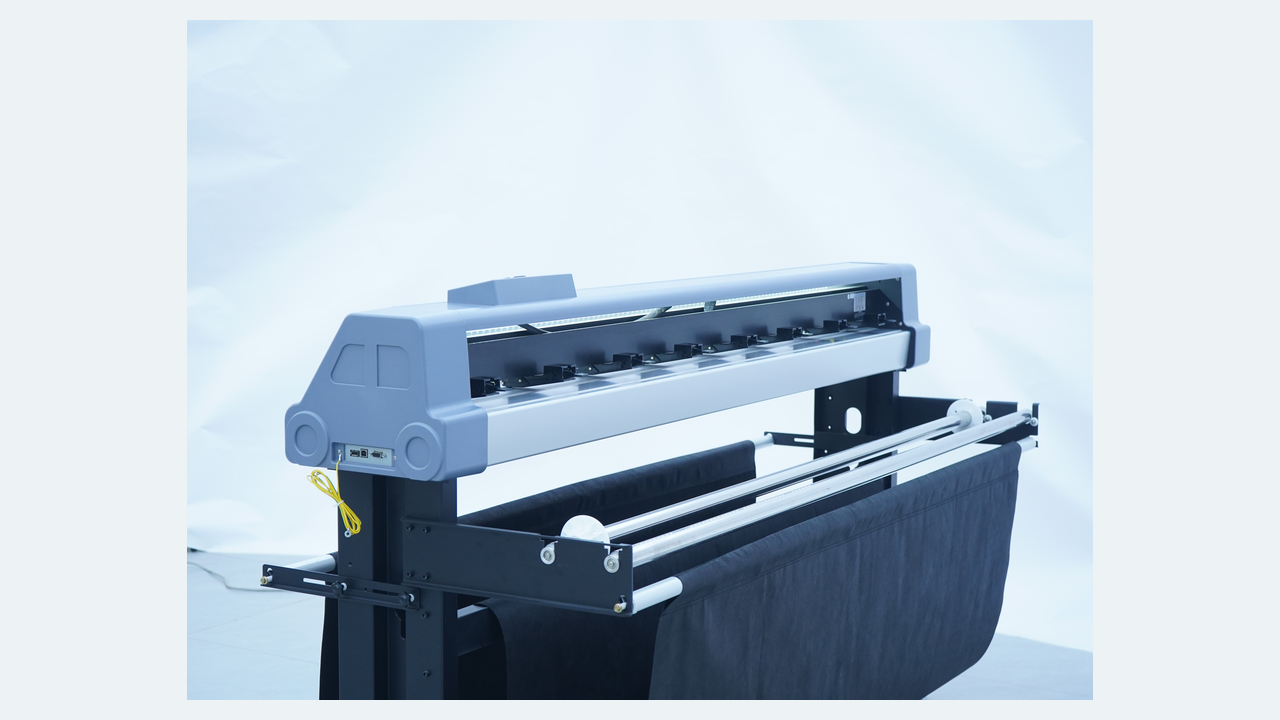
A roll-fed plotter uses feeding rollers to move film through the cutting area. The cutting head generally travels across the film, while the feeding mechanism moves the material forward or backward as required.
This arrangement is common in film cutting because many automotive films are supplied in rolls. It also allows shops to work with longer patterns without laying out the entire material length on a large stationary table.
But the feeding system needs to do its job properly. Film tracking, roller pressure, material tension, and the condition of the roll all matter.
Why the Cutting Method Matters
Think about a shop preparing several PPF kits before the installers arrive. With a flatbed system, the operator may spend more attention on material positioning and platform setup. With a roll-fed system, the operator may focus more on loading the roll correctly, keeping it aligned, and making sure it feeds smoothly.
Neither workflow is automatically better. The important question is which one causes fewer interruptions for the work your shop handles most often.
2. Material Handling: Where the Real Difference Begins
A cutting plotter may look impressive in a showroom. But in a working shop, the way it handles a roll of film is often more important than its appearance.
PPF is not always easy to work with. Large pieces can be awkward to position, and film may curl, shift, or develop handling marks if the setup is poor.
Keeping Film Stable During Cutting
Material stability is one of the biggest differences between cutting systems. In a flatbed arrangement, a supported surface helps keep the film positioned while the cutting head moves.
On a roll-fed machine, stable tracking becomes especially important because the material must travel through the mechanism during cutting. Problems may appear when the roll is loaded unevenly, the feeding path is obstructed, or the material is not properly supported.
This does not mean roll-fed machines are inaccurate. A well-designed feeding mechanism, properly adjusted for the material, can deliver consistent results. Shops should test how a machine handles their actual films, not just watch it cut a small demonstration pattern.
Handling Long and Large Patterns
Large hoods, roofs, rocker panels, and bumper patterns create different demands. A large pattern needs enough usable cutting width. Long patterns also need a reliable way to manage material movement.
On a flatbed machine, ask whether longer jobs require repositioning, automatic feeding, or sectional cutting. On a roll-fed machine, ask how the system maintains alignment during extended feeding.
One useful test is to cut a long pattern and check whether the result remains consistent from the beginning to the end.
What Changes When You Switch Materials?
Many shops handle more than PPF. Window tint and vinyl wrap may also be part of their daily business. These materials differ in thickness, flexibility, backing, and handling requirements. A setting that works well for one roll may not be appropriate for another.
Before purchasing, test the materials you actually use:
- ✓ PPF: Check cutting depth, edge quality, and how well the material is supported.
- ✓ Window tint: Check whether thin film feeds smoothly without wrinkling or shifting.
- ✓ Vinyl wrap: Check cutting consistency, detail handling, and material compatibility.
A machine that performs well across your everyday materials is usually more valuable than one that performs impressively with only a single demonstration roll.
3. Cutting Accuracy, Speed, and Daily Workflow
Every plotter manufacturer talks about speed and accuracy. Those specifications matter, but they do not tell the whole story.
A machine that cuts quickly may still slow down a shop if loading takes too long, settings need frequent adjustment, or operators repeatedly stop to correct material problems.
Does Flatbed Cutting Always Mean Better Accuracy?
Not necessarily. Flatbed cutting reduces certain material-movement variables during the cutting operation. But cutting accuracy also depends on the cutting mechanism, calibration, blade condition, material properties, and software settings.
Roll-fed equipment can also provide precise cuts when its feeding and tracking systems are properly designed and maintained.
There is another point buyers sometimes overlook: the machine only cuts the pattern it receives. If the digital PPF template is incorrect, cutting it perfectly does not solve the installation problem.
SlaByte discusses this relationship in its article on how cutting data affects installation quality.
→ Good equipment and accurate cutting data need to work together.
Cutting Speed vs Actual Job Completion Time
A high cutting speed looks attractive on a specification sheet. But imagine two machines.
Machine A completes a cutting operation quickly, although the operator spends extra time loading, adjusting, and removing film. Machine B cuts more slowly but requires less preparation for that particular job. Which one is more productive?
You cannot answer without measuring the complete process. For a fair comparison, record the time spent on:
- ① Preparing and loading material.
- ② Positioning or aligning the film.
- ③ Sending and completing the cutting job.
- ④ Removing, inspecting, and preparing the cut film for installation.
Repeat the test with different types of jobs. Total job preparation time is more useful than looking at cutting speed alone.
How Operator Experience Affects Results
Your most experienced technician may be comfortable operating almost any machine. A new employee may not be.
Clear controls, predictable feeding, easy access to the cutting area, and understandable software can make daily operation easier.
When comparing machines, let the people who will actually use the equipment perform the demonstration. Watch whether they can load the film, find the correct settings, and complete the job without constant assistance.
If a machine works well only when your most experienced employee operates it, that is worth considering before you buy.
4. Shop Space, Maintenance, and Running Costs
Equipment needs more than a place to stand. It needs enough space to work properly. That sounds obvious, but machine dimensions are often checked more carefully than the space needed to operate the machine.
How Much Working Space Do You Actually Need?
A flatbed cutter generally requires room for its platform and operator access. A vertical roll-fed plotter may occupy a different floor area, but it still needs sufficient clearance for feeding, collecting, and changing material.
Neither footprint should be judged from machine dimensions alone. Before purchasing, mark the proposed installation area on your shop floor. Then imagine a normal working day.
Can someone load a full roll comfortably? Can another employee walk past without touching the film? Is there enough room to remove a large cut piece without folding it?
If your shop has limited space, these questions matter. For a closer look at machine dimensions and working space, see SlaByte’s guide to choosing the right plotter size.
Setup, Cleaning, and Maintenance
Both cutting systems require regular care. Roll-fed plotters need attention to the feeding path, rollers, cutting strip, and alignment. Flatbed systems require checks of the working surface, cutting head, holding mechanisms, and any automated feeding components.
Actual maintenance requirements depend on the machine design. Instead of assuming one type costs less to maintain, ask suppliers practical questions:
- Which parts need regular inspection or replacement?
- Can operators perform routine maintenance themselves?
- How are feeding or calibration problems diagnosed?
- What happens if the machine stops during a busy working day?
A clear maintenance plan can be more valuable than an impressive specification that rarely affects daily work.
Looking Beyond the Purchase Price
The cheapest machine is not always the least expensive to operate. Think about the total cost of ownership.
This may include operator training, routine maintenance, replacement parts, material waste, downtime, and technical support.
At the same time, a larger or more expensive machine is not automatically a better investment. If it offers functions your shop rarely uses, those functions may not justify the additional expense.
The goal is to buy enough capability for your actual workload without paying unnecessarily for features that remain unused.
5. Flatbed vs Roll-Fed Plotters: Side-by-Side Comparison
Here is a practical comparison of the two cutting approaches.
| Factor | Flatbed Cutting | Roll-Fed Cutting |
|---|---|---|
| Material movement | Material is supported during cutting; movement depends on design | Rollers move material through the cutting area |
| Cutting head | Moves across the platform | Moves across the film while feeding handles the other axis |
| Material stability | Depends on platform support and holding method | Depends heavily on feeding, tracking, and tension |
| Long patterns | May use extended platforms, feeding, or sectional cutting | Uses controlled roll feeding for long jobs |
| Shop space | Requires room for platform and access | Requires machine space plus feeding clearance |
| Daily setup | Emphasis on placement and platform preparation | Emphasis on roll loading and alignment |
| Main buying question | Does the platform workflow suit our jobs? | Can the feeder handle our materials consistently? |
This comparison describes general cutting methods, not guaranteed performance differences between every model.
An automated flatbed machine may handle long jobs very differently from a basic fixed-bed cutter. Likewise, a well-engineered vertical plotter may provide better material support than buyers expect.
Use the table as a starting point — not as a substitute for a real cutting demonstration.
6. How SlaByte P80 and V70 Approach Film Cutting
SlaByte offers different machine designs for different cutting workflows. Two useful examples are the S-Cut P80 and S-Cut V70. Both are designed for professional film work, but they approach material handling differently.
S-Cut P80: A Platform-Based Cutting Approach
The SlaByte S-Cut P80 uses a platform-based cutting structure. Its defining principle is that the film remains positioned while the cutting head moves during a cutting operation.
This approach reduces the need to move the material repeatedly within an individual cutting section. The P80 also features servo-driven movement, automated feeding, and segment cutting. This is important because a platform-based machine does not necessarily limit a shop to short, fixed-size patterns.
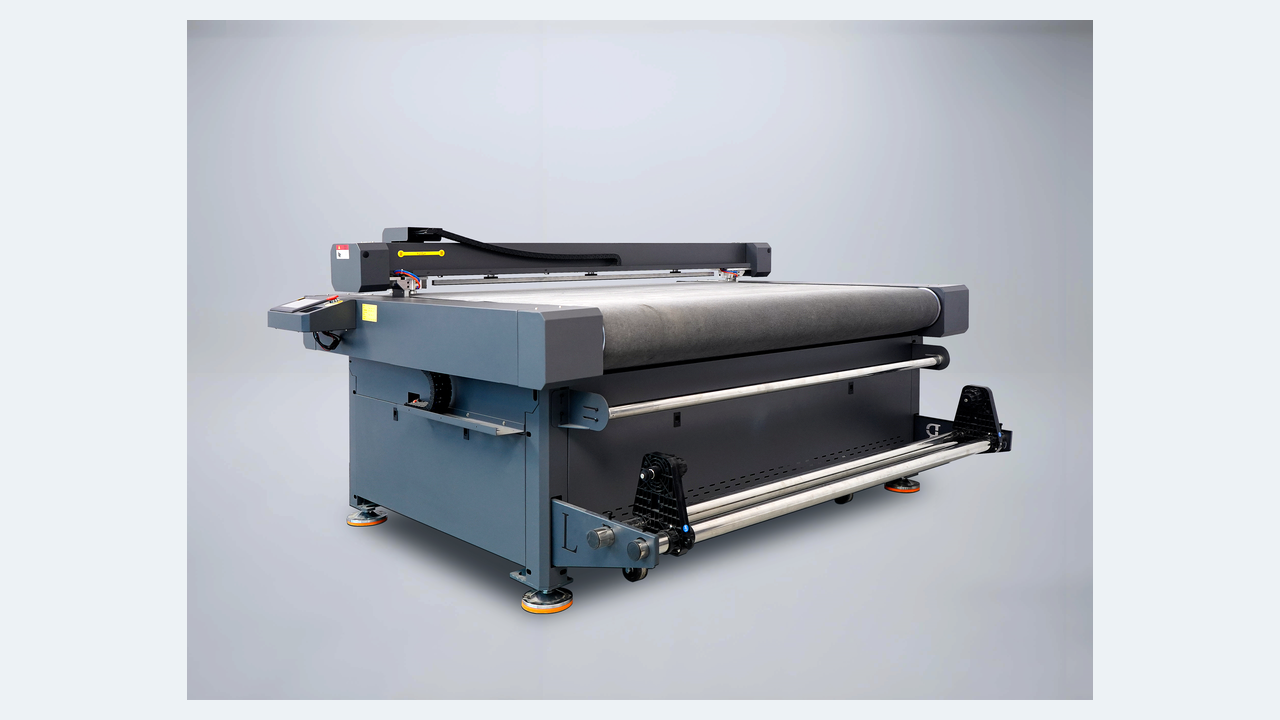
For buyers considering the P80, the most useful demonstration would involve the actual types of PPF panels they cut regularly. Ask to see how material is prepared, how longer patterns are handled, and how operators remove finished pieces.
The point is not simply to admire the machine’s design. It is to understand whether that design fits your production process.
S-Cut V70: A Vertical Plotter with a Wider Working Platform
The SlaByte S-Cut V70 takes a different approach. It is a vertical, roll-fed plotter, but SlaByte describes it as a Mini Flatbed because of its wider material-supporting platform.
The V70 combines roll feeding with a wide cutting table designed to support film during operation. Its design also includes a silent centrifugal turbine vacuum system for thin-film handling and an anti-crease feeding arrangement.
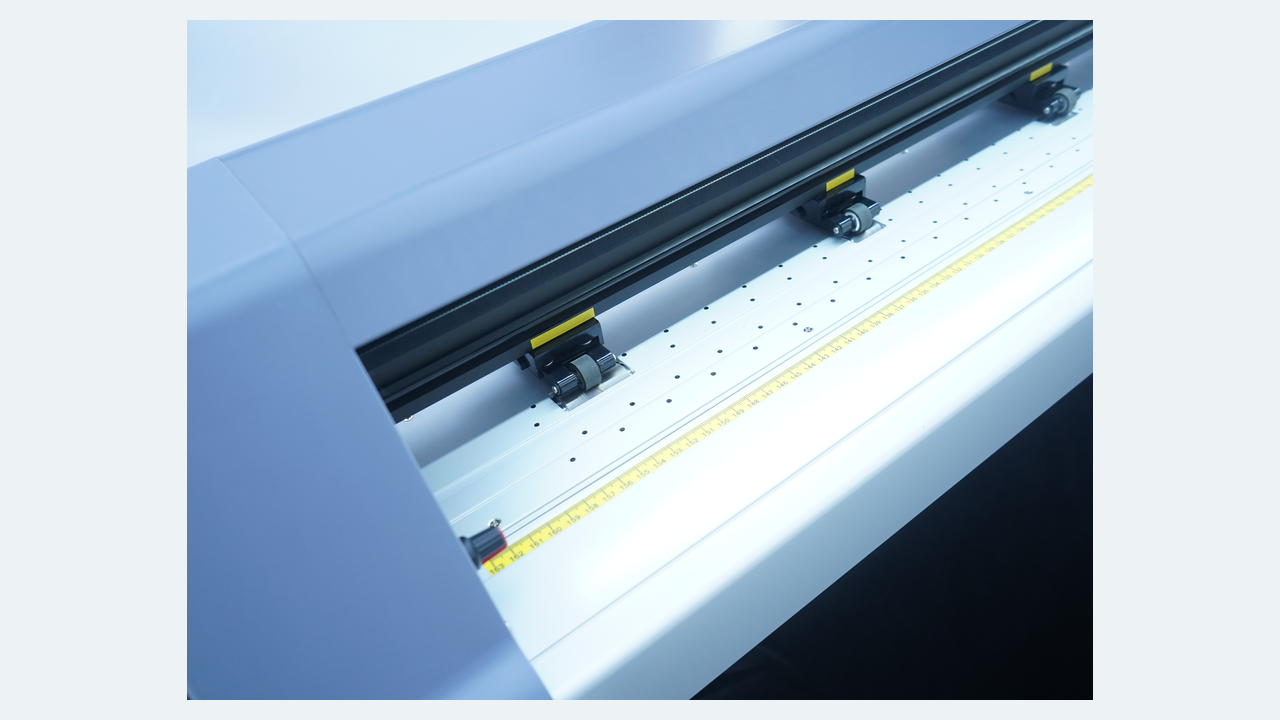
These features are particularly relevant to shops that regularly switch between PPF, window tint, and color wrap materials. The V70 also has a 3.5-inch color display with physical silicone control buttons.
For buyers, the real test is how these features behave with their daily materials. Try loading different film types. Watch how the material is supported during feeding. Check whether the operating steps feel straightforward to your staff.
Why the Best Choice Depends on Your Jobs
The P80 and V70 should not be viewed as simply a more expensive machine versus a cheaper one, or an advanced machine versus a basic one. They represent different ways of managing the cutting process.
A shop that values a platform-based workflow may find the P80 worth examining closely. A business that regularly handles rolled materials and wants a vertical machine with additional film support may prefer to evaluate the V70.
Neither recommendation should be made without considering available space, common material widths, team experience, and expected workload. The sensible approach is to test both against real jobs, then compare the complete workflow.
7. Which Plotter Should Your Shop Choose?
There is no single answer for every PPF business. A small tint shop, a full-body PPF studio, and a high-volume wrap business may all have different priorities.
For New or Small Film Shops
If you are opening a new shop, focus on reliability and usability before advanced specifications. You need equipment that your team can learn, maintain, and use without unnecessary complications.
Start with the films you expect to cut most often. Then check whether the machine fits your available space, budget, and software.
Do not purchase a large platform system simply because it looks more professional. Equally, do not automatically choose a smaller machine because it costs less. Choose what fits the jobs you can realistically expect to perform.
For High-Volume PPF Businesses
For a shop preparing multiple vehicles each day, workflow consistency becomes especially important. Frequent loading, repeated settings, film handling, and interrupted cutting jobs can create bottlenecks.
A useful evaluation should involve a series of real production tasks rather than one short demonstration. Compare how operators move from one job to another and whether the machine handles repeated work comfortably.
Also consider service availability and what happens when the equipment needs attention.
For Shops Handling Multiple Film Types
A mixed-material shop needs material flexibility. The machine may cut PPF in the morning, window tint after lunch, and vinyl patterns later in the day.
What matters is how easily operators can switch between those jobs. Check material compatibility, feeding behavior, blade settings, and the time needed to change rolls.
If your team regularly makes these transitions, smooth daily operation may be more valuable than a single headline specification.
For additional purchasing considerations, SlaByte’s article on choosing a cutting plotter for different film types provides a broader checklist.
A Practical Buying Checklist
Before making a final decision, ask your supplier to demonstrate the following:
- ✓ A full-size pattern using the film you normally purchase.
- ✓ A longer cutting job that tests feeding or sectional handling.
- ✓ A change between two different film materials.
- ✓ Film loading and unloading by a regular operator.
- ✓ The required software connection and cutting settings.
- ✓ Routine maintenance, support, and replacement-part procedures.
If possible, bring your own test files and film samples. A real production test tells you much more than a polished showroom demonstration.
8. Frequently Asked Questions
Is a Flatbed Cutter Always More Accurate Than a Roll-Fed Plotter?
No. Flatbed systems can reduce material movement during a cutting section, but accuracy also depends on machine construction, calibration, blade condition, film behavior, and cutting data. A well-adjusted roll-fed plotter can also deliver precise results.
Can Roll-Fed Plotters Handle Large PPF Patterns?
Yes, provided the machine has sufficient usable cutting width and an appropriate feeding system. Long-pattern performance should be checked with real material and realistic cutting lengths, rather than assumed from advertised specifications.
Which Type of Cutting Plotter Needs More Workspace?
It depends on the specific machine. Flatbed cutters need room for their platform and operator access, while vertical roll-fed plotters need clearance for material movement. Always compare actual installation dimensions and working requirements.
Can One Plotter Handle PPF, Window Tint, and Vinyl Wrap?
Some plotters are designed to work with all three, including suitable professional film-cutting models. However, compatibility should be verified using the actual materials, blade settings, and software workflow your shop uses.
9. Final Thoughts: Choose the Workflow, Not Just the Machine
Flatbed and roll-fed cutting systems solve similar problems in different ways. A flatbed setup can provide a supported cutting environment, while a roll-fed plotter offers a workflow built around moving material through the cutting area.
Modern designs can also combine elements of both approaches, which is why a machine’s category alone rarely tells the whole story.
Before buying, look at your regular film types, the space you have, and the number of jobs your team needs to prepare. Then test the machines under conditions that resemble your daily work.
The best plotter is not necessarily the fastest, largest, or most expensive. It is the one that helps your shop work consistently without adding unnecessary steps.
If you are comparing different cutting workflows, the SlaByte team can help you explore how the P80 and V70 fit different operational needs.
A good purchase starts with understanding your work — not simply choosing a machine from a specification sheet.