China has become a major sourcing base for automotive, architectural, and safety window films. Its suppliers offer broad Tint Program options, including dyed, carbon, ceramic, and hybrid films. However, product variety can also create confusion for global buyers.
Darrell Smith, an experienced window-film educator and former International Window Film Association executive director, has emphasized, “The film is only part of the solution; installation determines the result.” This principle remains practical. A premium roll cannot compensate for poor surface preparation, weak training, or inconsistent quality control.
A reliable Tint Program supplier should provide clear technical data, stable production records, and traceable batch information. Buyers should examine visible light transmission, infrared rejection, ultraviolet protection, heat performance, color stability, and adhesive behavior. Sample testing matters. A film may look neutral under a showroom lamp but appear noticeably blue beside a vehicle window.
Supplier evaluation should also include factory communication, packaging quality, warranty terms, and after-sales support. Certifications can help, but they should be checked against the actual product and production site. Marketing language alone is not enough.
No supplier list is perfect. Product specifications may change, and online information can become outdated. Global buyers should request current samples, independent testing, and written documentation before approving a program. Price still matters, but it should not lead the decision. The cheapest option may bring higher installation complaints later.
This overview introduces leading China-based Tint Program suppliers and explains how buyers can compare capability, consistency, and long-term commercial value with greater confidence.
A top tint program supplier is more than a film factory. It provides stable specifications, batch testing, installation guidance, and dependable international logistics. Global buyers need one partner who can manage color consistency, visible light transmission, infrared performance, and adhesive quality across repeated orders. A useful program also includes sample cards, technical data sheets, training materials, and responsive after-sales support.
Performance matters beyond appearance. The International Energy Agency reported in its 2023 Global Status Report for Buildings and Construction that buildings consume about 30% of global final energy. The report also links buildings to roughly 26% of global energy-related emissions. Properly selected window tint can support solar-control strategies, although results depend on glass type, climate, orientation, and installation quality. ASTM and ISO test methods can help buyers compare heat rejection, optical clarity, and durability. Claims still require careful verification.
Tips: Request samples from different production batches. Test them on the glass used in your market. Check packaging, roll length, warranty terms, and replacement procedures. Ask whether the supplier can provide regional compliance documents and installer training. Do not judge quality from a dark showroom sample alone. A perfect forecast is impossible. Even experienced buyers can overlook edge lifting, haze, or changing freight conditions. A small pilot order may reveal more than a polished presentation.
Professional window tint programs from China typically cover several core product categories for global buyers. Automotive films focus on heat rejection, glare reduction, ultraviolet protection, and clear outward visibility. Common options include dyed, carbon, ceramic, and hybrid constructions. Each type offers different performance, appearance, and price points.
Architectural films serve office windows, homes, retail spaces, and public buildings. Solar control films can reduce interior heat and fading. Decorative films create frosted, gradient, or patterned privacy effects.
Safety films add tear resistance to glass, but they are not a substitute for structural glazing. Buyers should request thickness data, adhesive details, visible light transmission, and measured solar performance.
A reliable professional program also includes sample rolls, technical datasheets, installation guidance, and batch-based quality checks. Ask suppliers to test color consistency across production lots. Small differences become obvious on large glass surfaces.
Packaging matters too. Strong cores, moisture protection, and readable labels reduce damage during long transport.
No program is perfect. Some films may show slight haze under certain lighting, while darker shades can affect night visibility.
Trial installation is still essential. Experienced buyers compare samples on real glass, not only on printed charts. Supplier audits, production records, and responsive technical support provide stronger evidence than sales claims.
China Top Tint Program Suppliers for Global Buyers
A reliable tint supplier should prove performance, not only show a darker sample. The U.S. Department of Energy reports that windows can cause 25–30% of residential heating and cooling energy use. This makes solar control measurable, not cosmetic. Ask for tested solar heat gain coefficient, visible light transmission, ultraviolet rejection, and emissivity data. Lower heat gain can improve comfort, but excessive darkness may increase lighting demand. That trade-off is often ignored.
Check whether reports follow recognized methods, such as ISO 9050, EN 410, ASTM E903, and ASTM D3359. These standards help evaluate optical properties, solar transmission, and adhesion. Request batch numbers, laboratory dates, and test conditions. Compliance documents should match the exact product, thickness, adhesive, and installation method. A certificate for another formulation is weak evidence. The U.S. National Fenestration Rating Council also stresses consistent rating methods for comparing window performance. Suppliers should explain regional requirements, including glazing compatibility and safety rules.
Tips: Test a sample on real glass for at least seven days. Measure indoor temperature, glare, and edge lifting. Inspect the film under angled light. Minor haze can become obvious after installation. Also ask for weathering results, not just initial appearance. In practical sourcing, the cheapest quotation may hide shorter durability or incomplete documentation. I have found that technical clarity matters more than polished sales language. Suppliers should admit performance limits; perfect claims deserve careful questioning.
This illustrative evaluation framework prioritizes compliance, optical quality, solar-control performance, durability, installation behavior, and documentation. Buyers should validate each category through test reports, sample inspections, accelerated-aging results, and traceable production records rather than relying on supplier claims alone.
China Top Tint Program Suppliers for Global Buyers
Reliable tint program suppliers combine controlled manufacturing with practical customization. Experienced factories usually manage coating, lamination, cutting, and packaging in organized production areas. Buyers should request process records, batch samples, and test data before placing large orders. Small details matter. Film thickness, adhesive consistency, and liner quality can affect installation results.
Customization may include visible-light transmission, solar control, color tone, roll width, core size, labels, and cartons. Professional suppliers translate technical requirements into production specifications instead of accepting vague requests. They should also explain which changes influence cost, lead time, or performance. A sample approval process is essential. It exposes problems early, although samples may not fully represent long-term field behavior.
International service requires more than export experience. Strong suppliers provide clear quotations, documentation, product instructions, and responsive communication across time zones. They can support container planning, inspection coordination, and shipment paperwork while following destination-market requirements. Packaging should protect rolls from moisture, crushing, and temperature changes during transit. Language gaps still occur. A careful supplier confirms every revision in writing and tracks corrective actions. No factory is perfect; even an experienced manufacturer may underestimate a custom order’s complexity. Regular audits, independent testing, and honest feedback help global buyers build a more dependable tint supply program.
| Anonymous Supplier Profile | Manufacturing Capability | Main Tint Program | Typical Film Thickness | VLT Options | Performance Characteristics | Customization Options | Quality and Compliance Documents | International Service Capability | Suitable Buyer Type |
|---|---|---|---|---|---|---|---|---|---|
| Profile 01 Integrated Film Manufacturer |
PET film coating, dyeing, laminating, slitting, and roll packaging performed within one production program. | Dyed, hybrid, carbon, and entry-level ceramic automotive window films. | Approximately 1.5–2.0 mil for standard automotive films; thicker constructions may be available. | Commonly 5%–70%, depending on the product series and local legal requirements. | UV rejection is commonly specified at up to 99%; visible-light transmission and solar control vary by construction. | Private labels, roll widths, core sizes, carton artwork, shade selection, and specification sheets. | Batch inspection records, technical data sheets, sample approvals, and basic test reports upon request. | Export packing, commercial invoices, packing lists, container loading support, and standard documentation for overseas buyers. | Distributors, installers, regional wholesalers, and private-label importers. |
| Profile 02 Ceramic-Focused Manufacturer |
Multi-layer coating and laminating processes using non-metallic ceramic or nano-ceramic materials. | Automotive ceramic and high-heat-rejection window film programs. | Typically around 1.5–2.0 mil for automotive applications. | Usually offered from approximately 5% to 70% VLT, with multiple intermediate shades. | Non-metallic construction is generally selected to reduce signal-interference concerns; IR performance depends on formulation and test method. | Shade development, product naming, packaging design, roll length, application instructions, and market-specific specifications. | Spectral data, visible-light transmission data, UV test results, heat-rejection test reports, and production samples. | Technical support for distributors, multilingual product documents, export labeling, and container or consolidated shipment coordination. | Premium automotive distributors, detailing chains, and professional installation networks. |
| Profile 03 High-Volume OEM Converter |
Large-scale coating, curing, slitting, and automated packaging with standardized production controls. | High-volume dyed, metalized, hybrid, and carbon film ranges for automotive and flat-glass use. | Commonly 1.5–2.0 mil, with separate options for thicker safety or multilayer products. | Broad shade range, often covering approximately 5%–80% VLT. | Performance is offered by series; dyed products prioritize appearance, while metalized and hybrid products generally provide stronger solar control. | Large-volume color matching, roll dimensions, carton configuration, barcodes, palletization, and recurring production schedules. | Incoming-material checks, in-process inspection, final-roll inspection, lot traceability, and pre-shipment inspection support. | Container planning, export documentation, production forecasts, replenishment programs, and distributor inventory support. | National distributors, large wholesalers, retail chains, and fleet-program buyers. |
| Profile 04 Private-Label Program Supplier |
Flexible converting and packaging operation designed for smaller product families and multiple customer specifications. | Private-label automotive tint, sample books, installation kits, and retail-ready packaging. | Usually 1.5–2.0 mil for standard products; final thickness should be confirmed by technical sheet. | Selected shades generally range from 5% to 70% VLT. | Product claims may include UV rejection, glare reduction, and solar-energy reduction; independent verification is recommended for each SKU. | Artwork, carton size, labels, instruction manuals, sample cards, roll length, and mixed-SKU order planning. | Artwork proofing, sample approval, lot inspection, packing inspection, and customer-specific quality checklists. | Low-to-medium volume export orders, mixed cartons, courier samples, freight-forwarder coordination, and document customization. | Start-ups, online retailers, regional brands, and installation businesses developing their own product line. |
| Profile 05 Safety and Security Film Supplier |
Thicker PET film production, adhesive coating, multilayer lamination, and controlled roll slitting. | Automotive safety film, security window film, clear protective film, and tinted safety constructions. | Often approximately 4.0–8.0 mil for safety-oriented constructions; product-specific data is essential. | Clear to dark-tint options, commonly from about 5% to 80% VLT. | Designed to help retain glass fragments after breakage; performance depends on film thickness, adhesive, glass type, and installation method. | Thickness, tint level, adhesive selection, roll width, safety markings, packaging, and application instructions. | Thickness verification, adhesion testing, impact-related test reports where applicable, batch traceability, and installation guidance. | Project quotations, technical consultations, export packing, installation training materials, and documentation for commercial projects. | Commercial-glass distributors, vehicle-security integrators, government contractors, and architectural installers. |
| Profile 06 Automotive and Architectural Program Supplier |
Film coating and converting for both curved automotive glass and large flat architectural glass formats. | Automotive tint, commercial-building solar-control film, decorative film, and privacy film. | Automotive products commonly use 1.5–2.0 mil; architectural products may use different constructions. | Automotive and architectural ranges commonly include approximately 5%–80% VLT. | Solar heat control, glare reduction, privacy, and UV filtering vary according to film type and glass system. | Roll width, length, surface finish, pattern, opacity, adhesive type, packaging, and project-specific cutting plans. | Technical data sheets, optical-performance data, installation recommendations, batch records, and project submittal documents. | Project-based quotations, sample dispatch, export logistics, installation coordination, and support for international contractors. | Building-material importers, glazing contractors, automotive distributors, and multi-segment project buyers. |
| Profile 07 Stock-and-Export Distributor |
Primarily sources finished films from manufacturers and provides local slitting, inventory holding, and export consolidation. | Fast-moving dyed, carbon, ceramic, decorative, and installation-accessory programs. | Depends on the selected manufacturing source; common automotive stock is approximately 1.5–2.0 mil. | Usually maintains popular shades between 5% and 70% VLT. | Performance is based on the original product specification and should be checked against the relevant technical data sheet. | Mixed-SKU cartons, local labels, export consolidation, small-batch packing, and stock-based assortment selection. | Supplier certificates, product data sheets, shipment inspection, packing records, and sample confirmation. | Shorter lead times for stocked items, mixed-container service, freight-forwarder coordination, and small-order export support. | Small importers, installers, e-commerce sellers, and buyers testing a new market. |
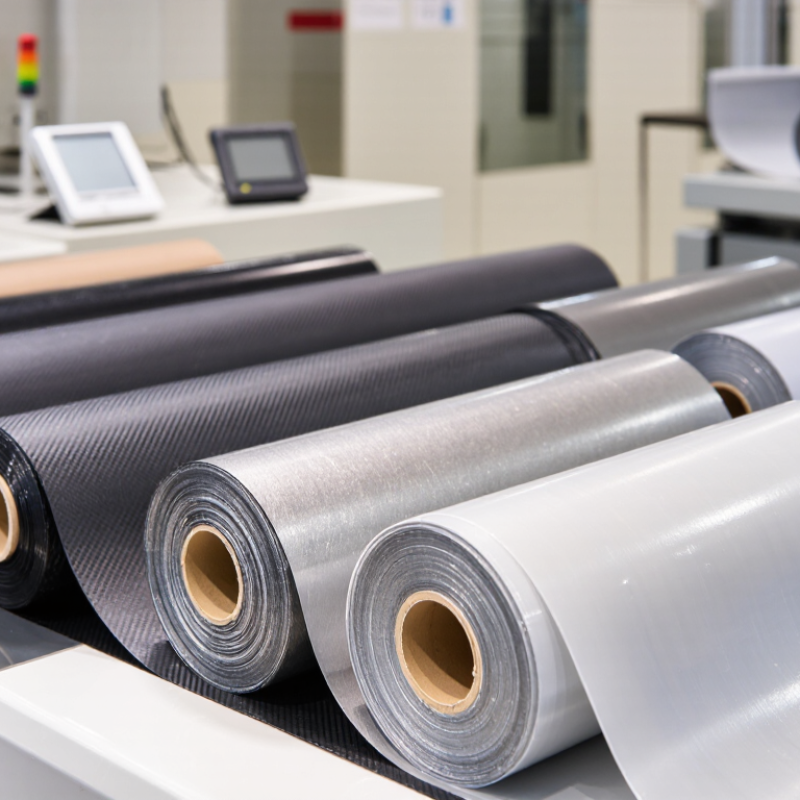
Choosing a global tint partner starts with defining the application, climate, and required performance. Automotive, architectural, and industrial projects need different tint structures. Ask for measurable data, not attractive color charts. Request visible-light transmission, solar-control results, adhesive performance, and durability records.
Start with evidence. Review production capacity, quality procedures, and material traceability. A capable supplier should explain its inspection points clearly. Check whether each batch receives shade, thickness, adhesion, and aging tests. Request recent test reports from independent laboratories when available. Confirm documents match the actual product, not only a standard sample. Small differences matter.
Communication deserves equal attention. Ask how quickly technical questions receive answers. Confirm lead times, minimum order quantities, packaging details, and replacement procedures before signing. Order samples from more than one production batch. The first sample may look perfect. It may not represent long-term consistency. A pilot order can reveal roll tension, surface defects, labeling problems, or delayed shipping. Include a written specification with approved color limits and inspection methods. No checklist is perfect. Leave room for review after the first shipment. Compare total cost, not only the quoted unit price. A cheaper tint can create higher installation waste, customer complaints, or customs delays. Choose the partner that provides clear evidence, stable communication, and practical support when conditions change.